Treatments · Gynecology visit and ultrasound
Your gynecology visit, with ultrasound at the same appointment
A gynecology visit is for checking your health and for looking into what worries you: changes in your period, pain, discharge or discomfort. The ultrasound is done at the same appointment and you see it on the screen.
First we talk
What is a gynecology visit like? It starts with a conversation.
We ask about your period, your medical history and what brought you in today. If you have questions, write them down beforehand so you do not forget any.
Then comes the exam, which usually takes a few minutes. It checks the uterus, the ovaries and the cervix, which is the opening of the uterus.
If you are due, the Pap test is taken at that point, sometimes together with an HPV test. How often you need it depends on your age and your past results: in general, every three or every five years.
You may feel pressure or mild discomfort, but it should not hurt. If something hurts, say so: you can ask for the exam to stop at any time.
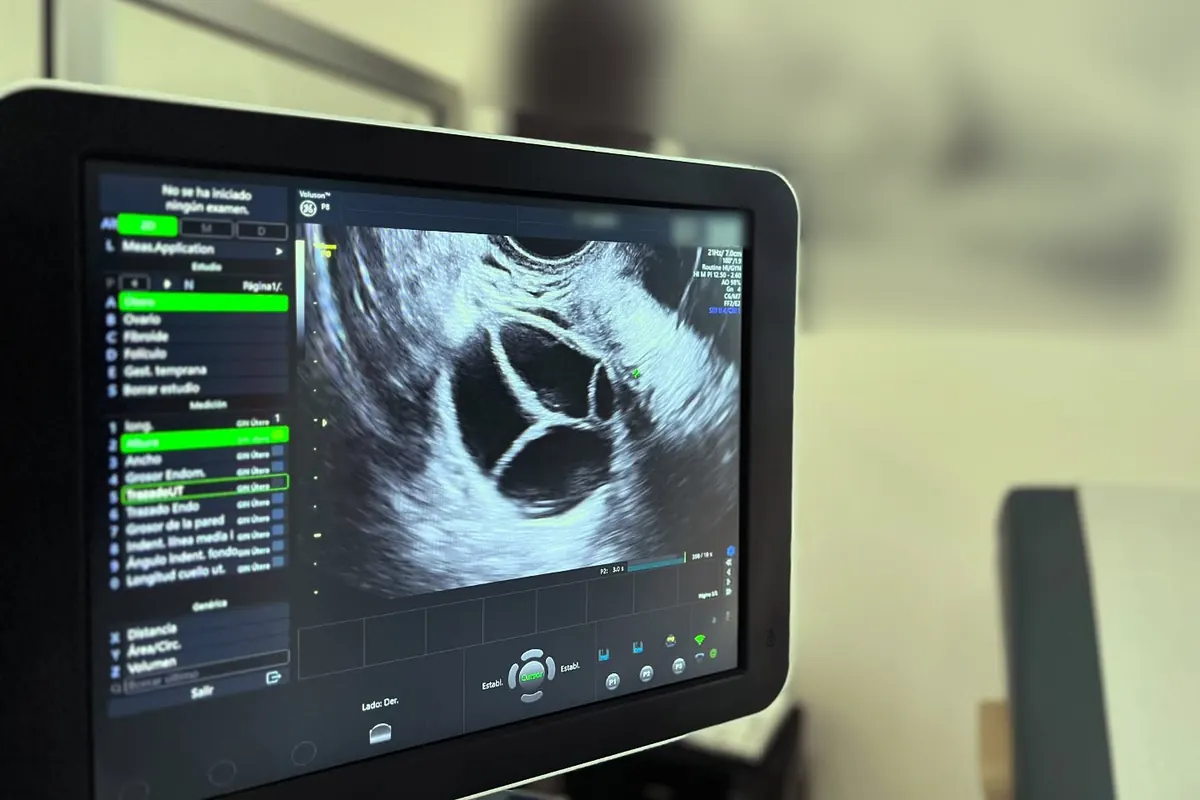
Then we move on to the ultrasound, and you see it on the screen. We explain what each thing is: the uterus and the ovaries.
At the end we tell you whether we found anything and what comes next: other tests, another visit or treatment.
Want us to take a look?
Message us on WhatsApp and tell us what is worrying you.
Book an evaluationThe office replies and proposes a date.
What to expect
- Before you come
- If you are due for a Pap test, try not to schedule it during your period, and avoid sex, douching and vaginal medicines or creams for the two days before. If you have bleeding that is not your period, do not put off the visit.
- That day
- The exam takes a few minutes. It can be uncomfortable, but it should not hurt.
- Afterward
- You go on with your day as usual. Pap test results can be ready in a few days or take up to three weeks.
What patients ask most
How often do I need a Pap test?
In general it starts at age 21 and is repeated every three years. From age 30 it can be done together with an HPV test, every five years. With certain risk factors you may need it more often. At the visit we look at your case.
Is the ultrasound vaginal or abdominal?
There are both. In the abdominal one the device is moved over your belly; in the vaginal one it is placed inside the vagina to see the uterus and ovaries. Sometimes both are done.
Can I come during my period?
For a Pap test it is best not to schedule it during your period, although it can be done. For the exam, a day without your period is also more comfortable. If you have bleeding outside your period, do not wait.
Sources
This page is for information only and does not replace a medical evaluation. It was prepared based on:
First consultation
Let's start by understanding what is going on.
Message us on WhatsApp, tell us briefly about your case and we'll propose the best date for your first consultation, with your partner if possible.